Christian Gonzalez Bonilla
Self-Assessment Essay
For FIQWS 10103 – Prof. Rao
When I first entered the class during the first day of the semester, I hadn’t really expected much from the class. I suspected that the first class I had taken that day, FIQWS 10003, would be somewhat related to the class I had just entered, but seeing the same people from my first class was pretty surprising. For the longest time, I had heard that CUNY schools were so packed and vast that many students never had the same classmates in their classes, but it was nice to see familiar faces during my first day in college. Professor Rao seemed very nice and inviting, which made the beginning days of class easier to manage, in terms of the emotional stress that could occur when being put in a new environment. Spending the first day of class on the syllabus also made managing the new ways that classes will be taught more manageable as well, and I was excited to be reading some works from authors (Zora Neale Hurston and Langston Hughes specifically) I had read before and have been meaning to read deeply for a long time! Spending the first couple of classes getting to know my classmates and the main topics of the course set me up for the success that I have seen so far in my LLN and its subsequent “translation.”
Through working on my Language and Literacy Narrative and the translation of that narrative into a performance of a piece of poetry, I’ve been able to hone my skills in literary analysis and understanding an author’s perspective through an emotional lens. Having my topic of the narrative be about the limits of literary analysis and written expression, using the work of Kenneth Koch as an example for this viewpoint, I, initially, found it difficult to extract a cohesive narrative from an experience that seemed benign to me. But, a discussion we were going to have in class required the class to read Mother Tongue by Amy Tan beforehand, and this piece had changed my perspective on how I could frame this experience I had with the work of Kenneth Koch. Though Tan’s piece was about code-switching and the familial ties to linguistic practice, I was able to see how a writer can take a personal experience they lived through and reflect that experience back into the world with a critical lens. After overcoming this doubt I had in my ability to turn my experience into a cohesive narrative, I had to strategically exercise my ability to think critically about the meaning of a work, especially with a poet who likes to play around with sincerity and humor in his writing. Being able to extract a general motivation from Koch in his decision to subvert William Carlos Williams’ “emotional…brevity” and the “sincerity in [his] apology” with “the ambivalent, almost mocking, nature of [his] variations.” When reading back my narrative, I was surprised and proud of myself because I was able to truly see my capability of engaging with a literary work to not only see the author’s intentions through the emotional lens, my analysis was able to get at Koch’s humorous personality, and the larger implications of his poetry, Koch’s focus on observing the limits of expression through writing and speaking.
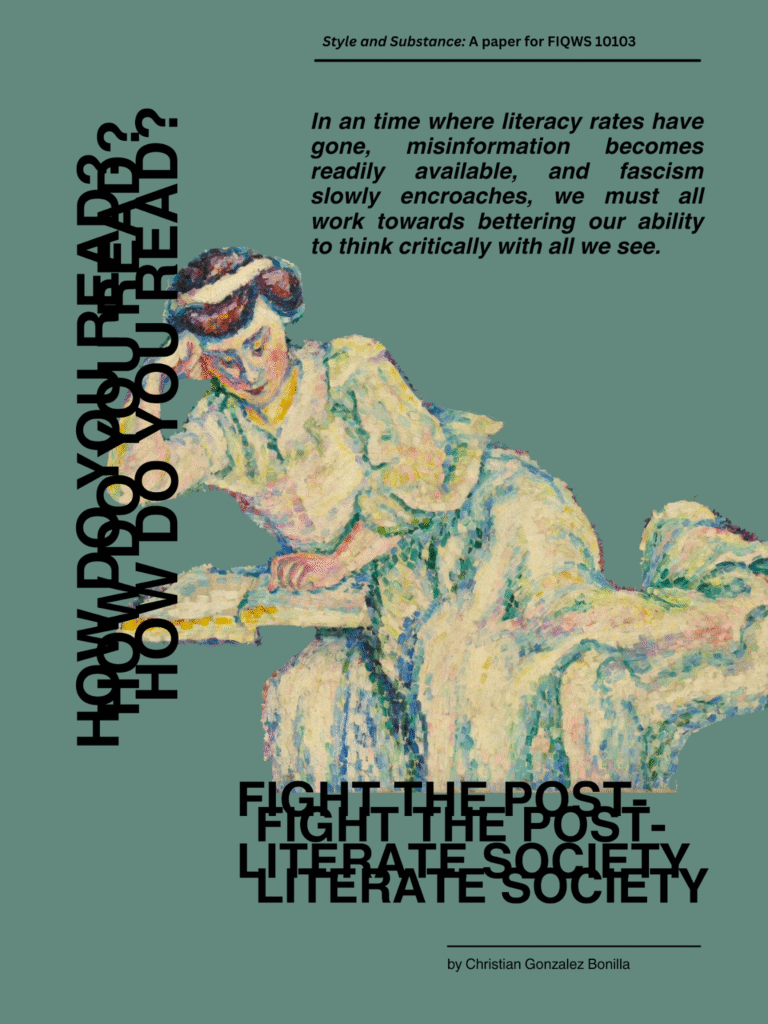
Throughout the rest of the semester, I can attest to 4 main statements regarding my work in and outside the class: I have developed in my ability to think critically with various texts, I am continuing to work towards refining my writing process, I am continuing to work on my ability to communicate with professors, and I need to start working towards a more consistent work ethic in my studies when faced with competing interests. To begin, it’s important to note that during the latter half of the semester, I had already grown tired of my weekly, day-to-day, routine as a student who also has a part-time job. My obligations at work, school, and my personal/social obligations were starting to collide and I quickly grew exhausted. This manifested in me not showing up at my fullest academically throughout the month, and sometimes led me to not showing up at all to class. Most of the absences in class occurred whilst the class focused primarily on working on the Synthesis essay, leading to me feeling even more overwhelmed and flooded. This led to my revised product being less than satisfactory, despite a strong beginning. Despite this, I attempted to work through my struggles in the beginning phases of the project. Not only did I bring outside sources, through the mentioning of Susan Sontag’s essay Against Interpretation, but I also used texts from the other section of the class to create a proposal that I was genuinely excited to write about. Tying my research proposal back to my Language and Literacy Narrative, which concerned itself on the importance of intention in written expression, I wanted to know if literature could be an arbiter for “resistance [against] ever-growing complacency to current power structures and the loss of the ability to think?” I had started to work on the paper, and submitted drafts on time, but then found myself stuck when writing as I felt the thesis I had created out of my proposal to be too theoretical, and less analytical. Attempting to prove Sontag’s “erotics of arts”, a term I hadn’t even fleshed out by that point, as an effective tool for engaging with writing was way more of a daunting task than I had originally thought. By the time I had to submit the final draft, I had not even created something that could be substantial. When talking with Professor Rao, I had already placed the thought in my head that I had failed the class and I was, frankly, embarrassed. This was because I knew that what I had submitted was not up to the standards I had set in the past. Despite this, Prof. Rao was understanding of my situation and gave me feedback that was helpful in redirecting my paper towards the actual task at hand. Through this interaction, I learned that being evasive and not communicating my problems with my professors would not help me at all. Despite my strengths, there will be a time where I need help. I am currently working on my final revision for the paper, where I will be analyzing the adverse effects of Standard Language Ideology in the academic setting.

This entry is licensed under a Creative Commons Attribution-NonCommercial-ShareAlike 4.0 International license.

